Welcome to our Carnivore / Ketovore / Keto Online Community!
Welcome to Carnivore Talk! An online community of people who have discovered the benefits of an carnviore-centric ketogenic diet with the goal of losing weight, optimizing their health, and supporting and encouraging one another. We warmly welcome you! [Read More]
Carnivore for one year.
- Replies 9
- Views 1.6k
- Created
- Last Reply



Most Popular Posts
-
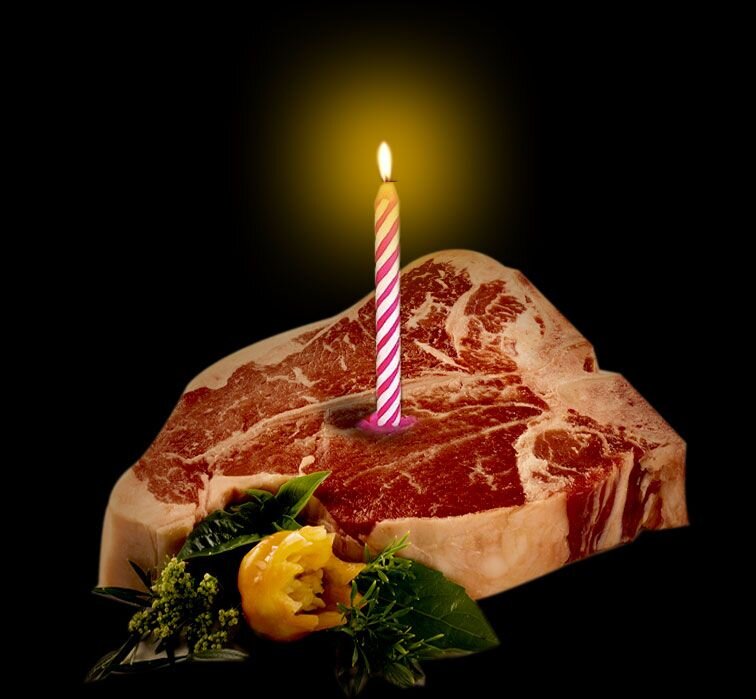
Happy Carniversary Scott.
-
Thanks for the replies. It has been quite the journey and most rewarding. I "celebrated" with back-to-back nights of big ol' honking rib eyes. Probably the best birthday cake I ever had (in more ways
-
Awesome progress, and much congratulations @Scott F. :) You've done so well with regard to the weight loss, and getting to live life without the dependency on daily prescription drugs would have me ab

Posted Images
Featured Replies
Featured Content
-
"World Carnivore Month" January Challenge!
Today is the first day of January and is also the first day of World Carnivore Month. To that end, let's challenge ourselves to eat a carnivore diet for the entire month of January. The type of carnivore diet and the level of strictness you choose to do is entirely up to you. Examples of carnivore diets include the following... 1) The Lion Diet. A person eating the Lion Diet only consumes the flesh of ruminant animals, water, and salt. 2) The BBBE Diet. BBBE is an acronym for Beef, Butter, Bacon, and Eggs. 3) The Carnivore Diet. This allows for the consumption of any and all animals and animal by-products, including dairy. In any of the above examples, the object of course is to not consume any plants as part of your diet. Of course, we're not going to micromanage hoe you prepare your food, so your use of seasonings is entirely your own personal choice. IF your circumstances don't allow you to go full on carnivore in January, then you can participate in this topic by challenge yourself to do better, above and beyond what you have been doing. For example, if you have still been eating grains, seed oils, refined sugar, or drinking alcohol, challenge yourself to avoid these items and just eat a clean, single ingredient whole foods diet such as clean keto, ketovore, or animal based. We encourage you to check in daily, and share what you have eaten, perhaps a weigh-in if you're willing, and enjoy in some small talk. Participants in this topic will be entered into a drawing for a prize at the end of the month.-
- 193 replies
 Featured by Guest
 -
-
What is your favorite way to eat/prepare eggs?
Vote for your favorite way to prepare eggs!
- 45 replies
Featured by Bob



Today marks one full year on carnivore. It has been quite the journey and more amazingly beneficial than anything I could have ever imagined.
I started off with carnivore as being just a weight loss hack. I had no idea there would be benefits other than those associated with weight loss. I didn't bother with any of the research on carnivore, the best ways to go about things, I just plunged right in headfirst. It didn't take too long to start learning and figuring things out. (some even the hard way)
I am extremely happy with the measurables. I started at 306lbs with my pant size 44-46. This morning, I weighed 213lbs, losing 93lbs in 12 months and a pant size of 38. If I hadn't started eating for grams of protein per pound the loss would have been well under 100 but I'm good with where and how I landed at 12 months. I have never had blood pressure or glucose issues and the only movement there is my blood sugar is now in the 80's most everyday whereas it was in the 90's before carnivore. My blood pressure has been a consistent 110/60. My cholesterol has improved some as my HDL is staying sort of constant, but my LDL dropped by 35 points on my last visit.
The biggest benefit is that I have NMO/SD, an autoimmune disease that had me on pain and inflammation medicine for just over six years. The prednisone and Neurontin sort of got me thru some rough times when the pain/inflammation was slowing me down. After 4-6 weeks on a strict carnivore diet I found I didn't need the medicine anymore. By the end of that sixth week, I had stopped taking the pain and inflammation medicine altogether. Being pain free is an incredible thing to experience and to get there without a daily medication is really hard to describe. I could not have been any more surprised and could not have been any more pleased with the first six weeks of carnivore.
I'm in the gym three to four times per week and the lifting is starting to grow both in weight and volume. It feels like I am performing better at 55 than 25.
A big thanks to the members of the board and sharing their experiences and thoughts. I'm a bigger fan of hearing someone's personal experiences over a medical study where I have to wonder if the backer had a monetary interest in the outcome of the research or whether the control subjects were really controlled subjects. I can relate to another person's story more than that of a bunch of doctors and control subjects. I really appreciate the exchange of information as it has helped me get over some obstacles here and there.
I'm still learning. After 12 months I think I am easing into carnivore becoming a life style vs. being a weight loss hack. Still, there is work to be done.
Scott