Welcome to our Carnivore / Ketovore / Keto Online Community!
Welcome to Carnivore Talk! An online community of people who have discovered the benefits of an carnviore-centric ketogenic diet with the goal of losing weight, optimizing their health, and supporting and encouraging one another. We warmly welcome you! [Read More]
- Replies 10
- Views 1.4k
- Created
- Last Reply



Popular Days
Most Popular Posts
-
Man I am so jealous must make things so much easier to just have plain dried beef (no chemicals added like the stores sell) just beef jerky and butter is a great snack
-
I’d like to make my own beef jerky but I live in a very small apartment. It would probably stink the whole building up if I had a food dehydrator drying beef, right? im tempted to buy a mini fan
-
Looks good. We tried with our electric some years back and it was hard to get down below 100 on the Masterbuilt. We ended up using the pig cooker and I built a hanging rack on one side, covered t
Posted Images
Featured Replies
Featured Content
-
"World Carnivore Month" January Challenge!
Today is the first day of January and is also the first day of World Carnivore Month. To that end, let's challenge ourselves to eat a carnivore diet for the entire month of January. The type of carnivore diet and the level of strictness you choose to do is entirely up to you. Examples of carnivore diets include the following... 1) The Lion Diet. A person eating the Lion Diet only consumes the flesh of ruminant animals, water, and salt. 2) The BBBE Diet. BBBE is an acronym for Beef, Butter, Bacon, and Eggs. 3) The Carnivore Diet. This allows for the consumption of any and all animals and animal by-products, including dairy. In any of the above examples, the object of course is to not consume any plants as part of your diet. Of course, we're not going to micromanage hoe you prepare your food, so your use of seasonings is entirely your own personal choice. IF your circumstances don't allow you to go full on carnivore in January, then you can participate in this topic by challenge yourself to do better, above and beyond what you have been doing. For example, if you have still been eating grains, seed oils, refined sugar, or drinking alcohol, challenge yourself to avoid these items and just eat a clean, single ingredient whole foods diet such as clean keto, ketovore, or animal based. We encourage you to check in daily, and share what you have eaten, perhaps a weigh-in if you're willing, and enjoy in some small talk. Participants in this topic will be entered into a drawing for a prize at the end of the month.-
- 193 replies
 Featured by Guest
 -
-
What is your favorite way to eat/prepare eggs?
Vote for your favorite way to prepare eggs!
- 45 replies
Featured by Bob




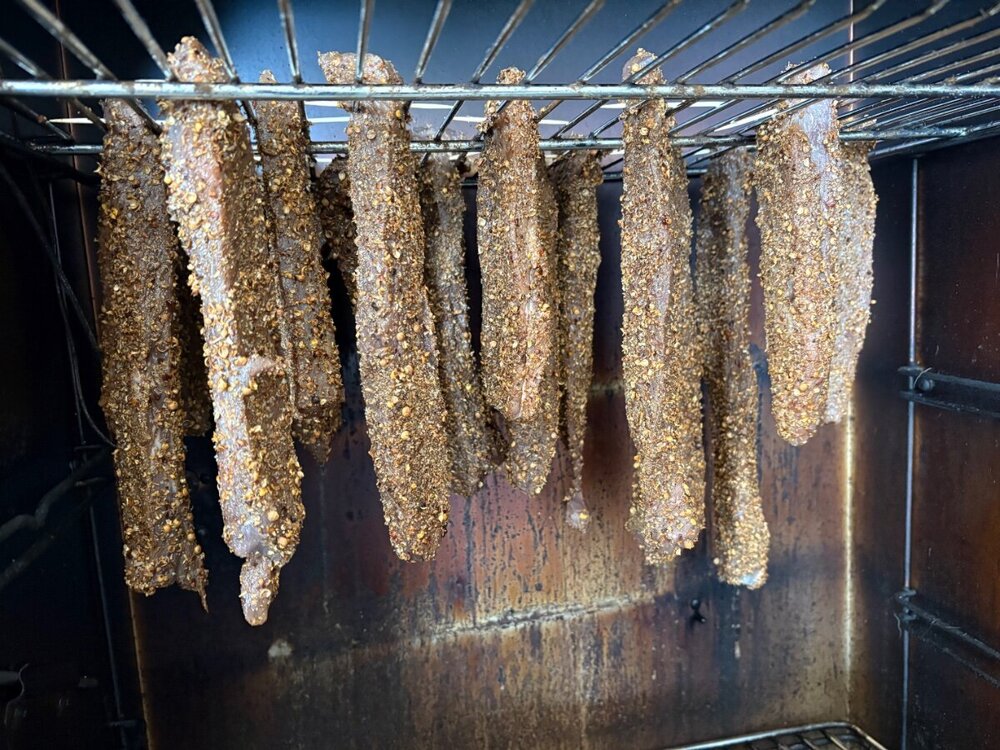
Trying my hand at making South African Biltong for the first time.
I turned my electric smoker into a drying box. The lowest I can get the temp is 100° and it’s recommended that it be dried at 65°-80° so I don’t know how well it’s going to work out. We shall see in about 7 days.
Here’s the recipe that I used.
Biltong Recipe - South African Traditional Beef Jerky:
• ~4 lbs lean beef (I used venison)
For the Marinade:
• 2 cups of apple cider or red wine vinegar
• 2 tablespoons Worcestershire sauce
For the Biltong Spice:
(per 4 lbs)
• 40 g salt
• 40 g TOASTED course ground coriander
• 14 g ground pepper
• 4 g red pepper flakes (optional)
Method
Mix the vinegar and W sauce.
Slice the meat into 1 to 1 1/2 inch strips
Place meat in a container and cover with the marinade. Place in the refrigerator for 1 hour. Massage meat and rotate to get complete coverage.
Place back in the fridge for another hour.
Remove meat from the marinade and lightly pat dry but still moist.
While the meat is marinating,
In a dry (no oil) skillet roast the coriander over medium heat until it releases the oils and becomes fragrant.
In a coffee bean grinder course grind the coriander, pepper and red pepper flakes together.
Mix all of the seasonings together and place them in a shallow pan.
Roll each piece of meat in the seasoning and using a plastic hook or in my case a toothpick hang it where it can air dry with a temperature between 65° and 80°.
Depending on the temperature it can take 7-14 days to dry. You are looking for it to lose 50% to 75% of its weight.
Slice thin and enjoy.