Welcome to our Carnivore / Ketovore / Keto Online Community!
Welcome to Carnivore Talk! An online community of people who have discovered the benefits of an carnviore-centric ketogenic diet with the goal of losing weight, optimizing their health, and supporting and encouraging one another. We warmly welcome you! [Read More]
Sardine cheese bites
- Replies 6
- Views 1.1k
- Created
- Last Reply
Top Posters In This Topic
-
Carnivore Chef 3 posts
-
Kat 2 posts
-
Miranda 1 post



Popular Days
Most Popular Posts
-
That looks great! I will definitely be trying this recipe soon.
-
Hey Carnivore Chef, an egg served as a binder. I just drained a can of sardines, mashed it up with one egg and one slice of goat cheese. Scooped onto a hot skillet with lard or ghee and fried. Topp
Posted Images
Featured Replies
Featured Content
-
"World Carnivore Month" January Challenge!
Today is the first day of January and is also the first day of World Carnivore Month. To that end, let's challenge ourselves to eat a carnivore diet for the entire month of January. The type of carnivore diet and the level of strictness you choose to do is entirely up to you. Examples of carnivore diets include the following... 1) The Lion Diet. A person eating the Lion Diet only consumes the flesh of ruminant animals, water, and salt. 2) The BBBE Diet. BBBE is an acronym for Beef, Butter, Bacon, and Eggs. 3) The Carnivore Diet. This allows for the consumption of any and all animals and animal by-products, including dairy. In any of the above examples, the object of course is to not consume any plants as part of your diet. Of course, we're not going to micromanage hoe you prepare your food, so your use of seasonings is entirely your own personal choice. IF your circumstances don't allow you to go full on carnivore in January, then you can participate in this topic by challenge yourself to do better, above and beyond what you have been doing. For example, if you have still been eating grains, seed oils, refined sugar, or drinking alcohol, challenge yourself to avoid these items and just eat a clean, single ingredient whole foods diet such as clean keto, ketovore, or animal based. We encourage you to check in daily, and share what you have eaten, perhaps a weigh-in if you're willing, and enjoy in some small talk. Participants in this topic will be entered into a drawing for a prize at the end of the month.-
- 193 replies
 Featured by Guest
 -
-
What is your favorite way to eat/prepare eggs?
Vote for your favorite way to prepare eggs!
- 45 replies
Featured by Bob




SARDINE CHEESE BITES
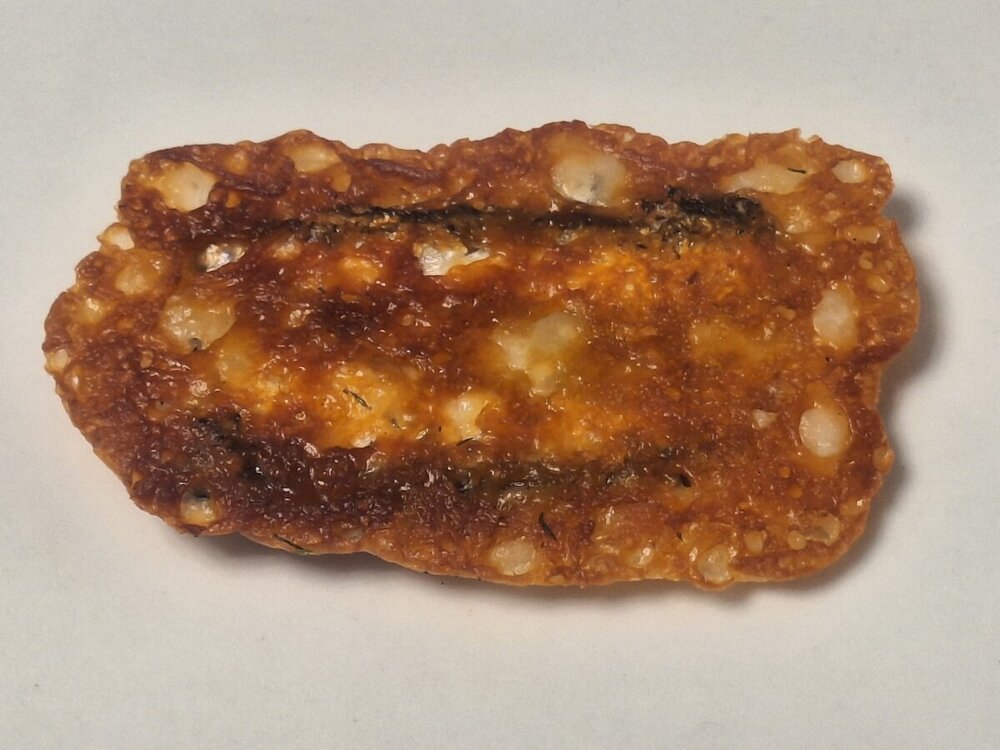
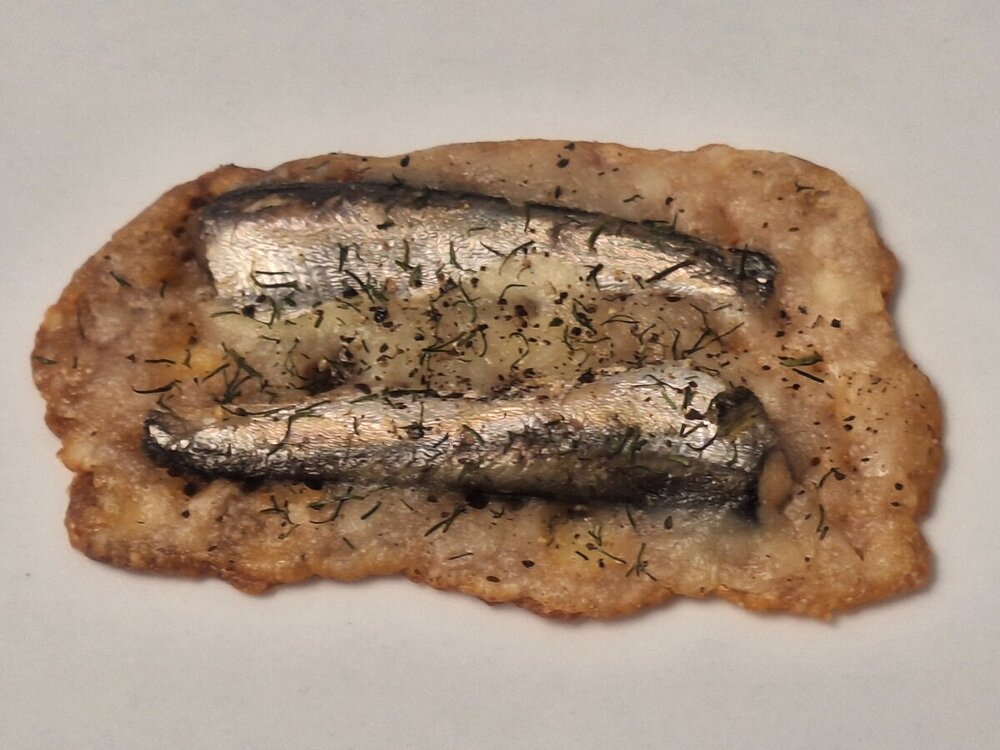
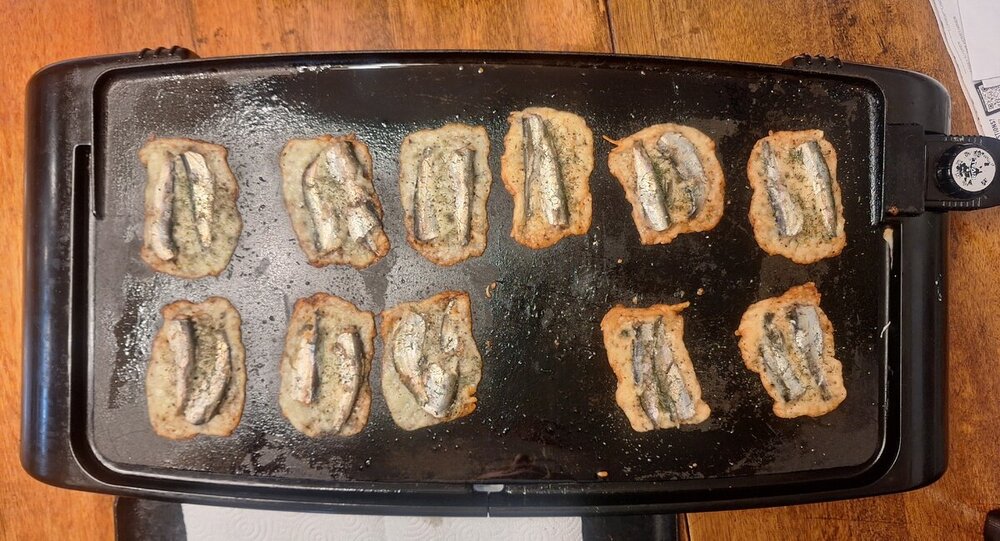
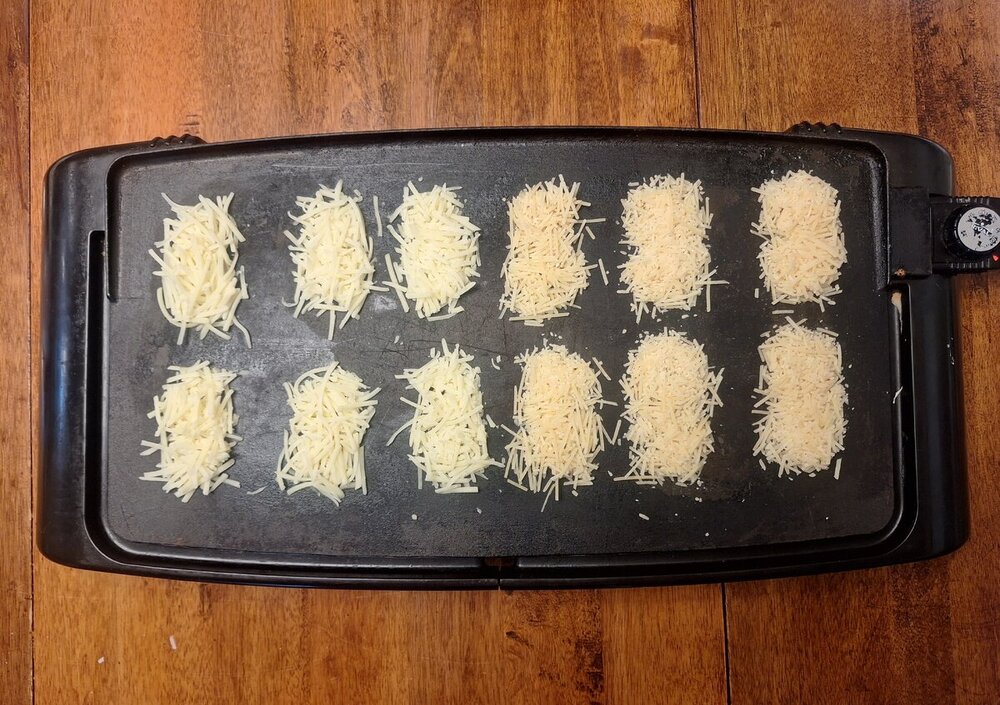
If you eat sardines, then these are tasty, satisfying little bites that can be eaten warm or stored in the fridge for a quick snack later on, eaten cold. I use hard cheeses that have a strong flavor profile to mask the strong taste of sardines. I made a double batch in the pictures below, using sharp chedder for one batch and parmesan for the other. Asiago also works well.
THE INGREDIENTS
1 can of sardines in spring water, well drained.
2/3 cup of shredded asiago, sharp chedder or asiago cheese. Medium slices of cheese also works
Fresh ground black pepper
A sprinkle of dried dill weed
THE PREPARATION
Using a griddle or large cast iron pan
 , arrange 5 piles of shredded cheese into a rough rectrange shape. Use 2 tablespoons of cheese for each pile. Use a spatula to push the cheese around to shape the rectangle. You want the cheese to be roughly the length of the sardines and the width of 2 sardines. Whatever sardines you have you can make it work.
Begin heating your griddle or pan on low. Let the cheese melt down some then fit 2 sardines on each cheese rectangle. Pieces of sardine is fine too.
Increase the heat a little bit. As the cheese melts it will spread out and some of the fat will release. No worries, just use the spatula to keep the cheese in its original shape by pushing the 4 outsides of the rectangle inward. As the pieces cook they hold their shape better. It doesn't have to be perfect as long as you have cheese under the sardines. Slowly heating the pieces works best.
You want a brown crust to form on the bottom of the cheese. Once the cheese melts you can carefully and begins to brown, you can move the pieces around on the hot surface for even browning. You can turn up the heat towards the end too if necessary.
Once you are happy, turn off the heat and let the pieces set for a few minutes until they can move without falling apart. They become quite sturdy. Once they are set give each piece a couple grinds of black pepper and a pinch of dried dill. Remove from pan to a paper towel. Eat warm and store leftovers in the fridge for later.
Let me know what you think. I just started a carnivore diet and I am not sure what kind of carnivore recipes exist. I just make up my own recipies.
Carnivore Chef
Edited by Carnivore Chef
For clarity