Welcome to our Carnivore / Ketovore / Keto Online Community!
Welcome to Carnivore Talk! An online community of people who have discovered the benefits of an carnviore-centric ketogenic diet with the goal of losing weight, optimizing their health, and supporting and encouraging one another. We warmly welcome you! [Read More]
Spam & Eggs AKA the Spamlet
- Replies 4
- Views 1.2k
- Created
- Last Reply


Popular Days
Most Popular Posts
-
I'd eat the shit out of that.
-
Used to? What is this heresy??
-
Yes it’s not ideal but as Dr. Barry says, it’s still better than eating a bunch of carbs. Eat what you can afford to eat. I used to love fried spam and eggs.
Posted Images
Featured Replies
Featured Content
-
"World Carnivore Month" January Challenge!
Today is the first day of January and is also the first day of World Carnivore Month. To that end, let's challenge ourselves to eat a carnivore diet for the entire month of January. The type of carnivore diet and the level of strictness you choose to do is entirely up to you. Examples of carnivore diets include the following... 1) The Lion Diet. A person eating the Lion Diet only consumes the flesh of ruminant animals, water, and salt. 2) The BBBE Diet. BBBE is an acronym for Beef, Butter, Bacon, and Eggs. 3) The Carnivore Diet. This allows for the consumption of any and all animals and animal by-products, including dairy. In any of the above examples, the object of course is to not consume any plants as part of your diet. Of course, we're not going to micromanage hoe you prepare your food, so your use of seasonings is entirely your own personal choice. IF your circumstances don't allow you to go full on carnivore in January, then you can participate in this topic by challenge yourself to do better, above and beyond what you have been doing. For example, if you have still been eating grains, seed oils, refined sugar, or drinking alcohol, challenge yourself to avoid these items and just eat a clean, single ingredient whole foods diet such as clean keto, ketovore, or animal based. We encourage you to check in daily, and share what you have eaten, perhaps a weigh-in if you're willing, and enjoy in some small talk. Participants in this topic will be entered into a drawing for a prize at the end of the month.-
- 193 replies
 Featured by Guest
 -
-
What is your favorite way to eat/prepare eggs?
Vote for your favorite way to prepare eggs!
- 45 replies
Featured by Bob




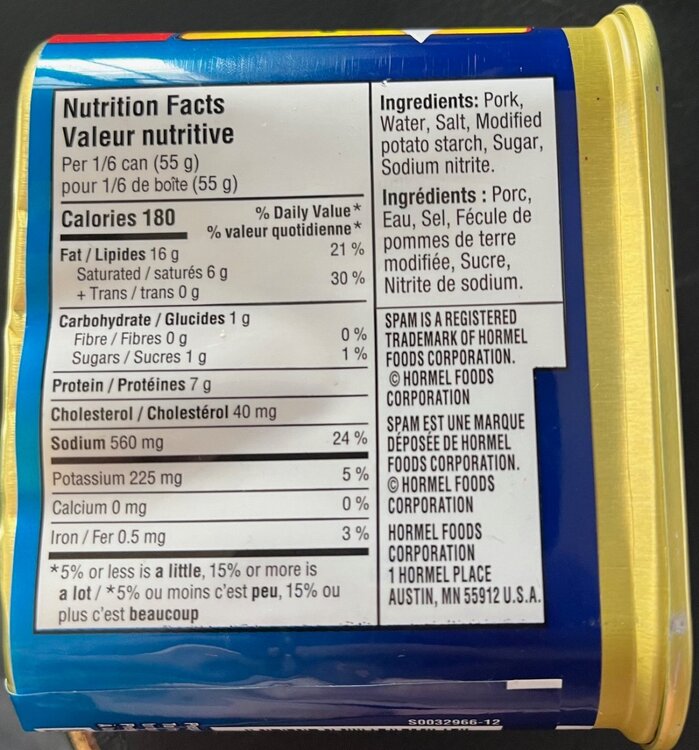
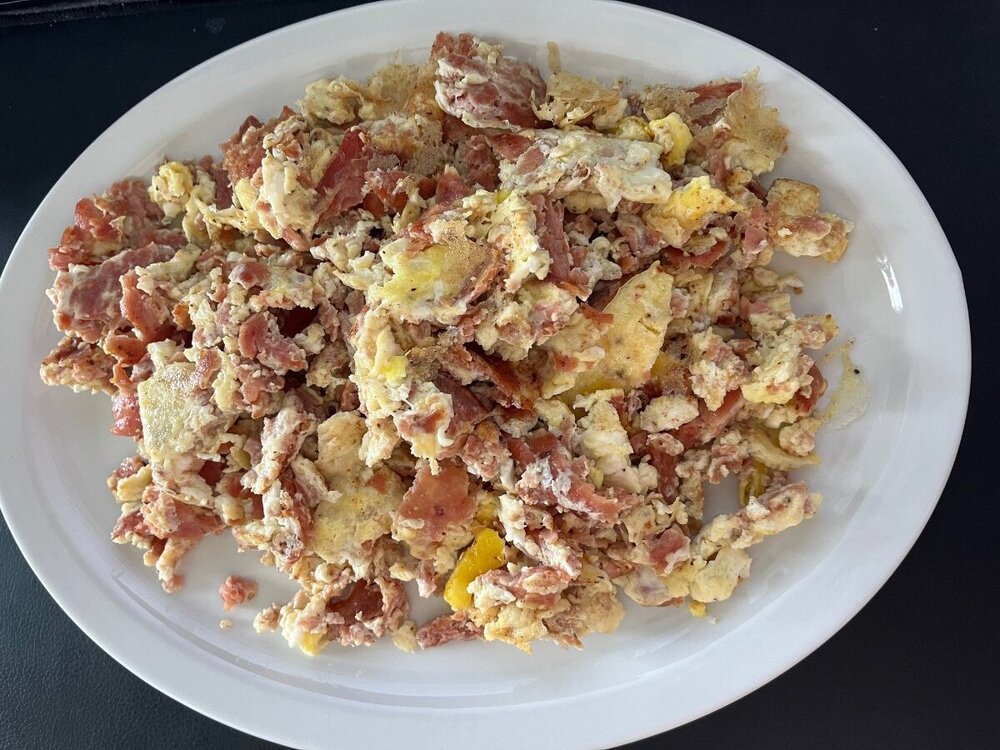
Recently I spotted Spam on sale for a good price so I picked one up. The ingredients aren't ideal, but it's a cost-effective option and, at least in my humble opinion, it's always good to have some canned meat in the pantry.
It also allows for a very simple and fast meal. You can always add to this simple base, but Spam (at least if you like the taste of Spam which I do) does a great job of carrying the dish on its own. You can substitute your preferred luncheon meat or corned beef if you desire.
Ingredients:
1 340g can Spam
6 eggs
1-2 tbsp fat for frying
Method:
1. Heat a frying pan over medium heat. Add 1-2 tbsp of ghee or your favorite fat or oil.
2. As the pan heats up uncan the Spam and cut into slices. Put Spam slices in pan to fry. Adjust heat if needed, I usually lower my burner to low (3) here.
3. Crack eggs into a bowl, add any additional seasoning you'd like to the eggs and beat.
4. Fry the Spam to your desired doneness and then use a spatula, spoon or a burger meat chopper to break up the Spam into smaller pieces.
5. Add scrambled eggs. Adjust head if needed, I usually lower mine to 2 here so I can leave it unattended for 5 minutes.
6. Flip and leave whole for a frittata style meal or break up into a scramble.
In this picture I only added a little bit of fresh ground black pepper to the eggs.
With my newly rediscovered love for the taste of Spam I'll probably eat this in some form once per week.