Welcome to our Carnivore / Ketovore / Keto Online Community!
Welcome to Carnivore Talk! An online community of people who have discovered the benefits of an carnviore-centric ketogenic diet with the goal of losing weight, optimizing their health, and supporting and encouraging one another. We warmly welcome you! [Read More]
Vegetarian Diet Linked To High Depression Scores, Suggests Large Meta-Analysis
- Replies 2
- Views 489
- Created
- Last Reply


Popular Days
Featured Replies
Similar Content

Featured Content
-
"World Carnivore Month" January Challenge!
Today is the first day of January and is also the first day of World Carnivore Month. To that end, let's challenge ourselves to eat a carnivore diet for the entire month of January. The type of carnivore diet and the level of strictness you choose to do is entirely up to you. Examples of carnivore diets include the following... 1) The Lion Diet. A person eating the Lion Diet only consumes the flesh of ruminant animals, water, and salt. 2) The BBBE Diet. BBBE is an acronym for Beef, Butter, Bacon, and Eggs. 3) The Carnivore Diet. This allows for the consumption of any and all animals and animal by-products, including dairy. In any of the above examples, the object of course is to not consume any plants as part of your diet. Of course, we're not going to micromanage hoe you prepare your food, so your use of seasonings is entirely your own personal choice. IF your circumstances don't allow you to go full on carnivore in January, then you can participate in this topic by challenge yourself to do better, above and beyond what you have been doing. For example, if you have still been eating grains, seed oils, refined sugar, or drinking alcohol, challenge yourself to avoid these items and just eat a clean, single ingredient whole foods diet such as clean keto, ketovore, or animal based. We encourage you to check in daily, and share what you have eaten, perhaps a weigh-in if you're willing, and enjoy in some small talk. Participants in this topic will be entered into a drawing for a prize at the end of the month.-
- 193 replies
 Featured by Guest
 -
-
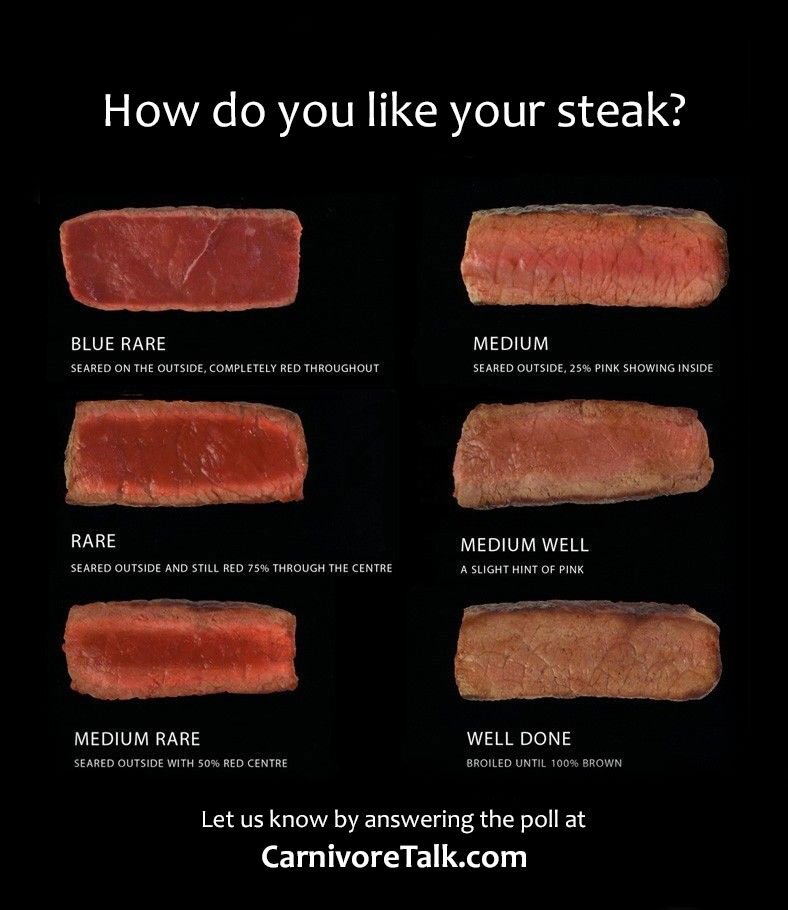
What is your favorite way to eat/prepare eggs?
Vote for your favorite way to prepare eggs!
- 45 replies
Featured by Bob



Vegetarian Diet Linked To High Depression Scores, Suggests Large Meta-Analysis
by Jack Dunhill, Social Media Coordinator and Staff Writer
Vegetarian diets could be linked with higher depression scores, suggests a huge meta-analysis of almost 50,000 people by researchers in Bochum, Germany. The research backs up existing studies that have linked ditching meat to an increased likelihood of depression, but the reason why remains elusive.
Whether vegetarianism actually plays a role in depression is poorly understood. Some studies have pointed the finger at the diet, while others have refuted the findings. To identify a link – if there is one – Sebastian Ocklenburg and Jette Borawski performed a large-scale meta-analysis on published studies that compared the depression scores of non-vegetarians and vegetarians. Their results are published in the Journal of Affective Disorders.
After accounting for duplicates, there were a total of 8,057 vegetarians and 41,832 non-vegetarians included in the analysis. While the sample was large, many of the participants were from similar countries, and so the diversity within the study was relatively low.
The researchers then used a statistical program to scour the studies for mood disorder scores and sufficient data to be considered significant, and 13 studies fit the bill.
Once all the findings were analyzed, the researchers discovered a significant increase in the depression scores of vegetarians compared to non-vegetarians. However, while the data was significant, there was also significant heterogeneity in the studies (how conflicting the results were between each study), indicating there was certainly not a unanimous conclusion.
The authors are clear in their paper that they wish to make no conclusions based on the results – it is still unclear whether the link is causal from the diet, or whether those that experience depression are more likely to choose vegetarianism. In one study included in the analysis, for example, the results indicated that more often than not, people with depressive symptoms started their vegetarian diet after the onset of the disorder, suggesting it is not a causal link. It is suggested that depression may make the person more health-conscious, leading them to vegetarianism, or that depression enhances the feelings of empathy towards animals. This is purely speculation at the current time, however.
With a significant link established, the authors now call for further research to understand its true nature. The first step would be to include more countries into the studies, as there is a clear bias in many of the studies towards a small number of countries. Once these are included, identifying whether the diet underlies the symptoms, or is purely a resulting lifestyle, will be incredibly important.
ARTICLE SOURCE: https://www.iflscience.com/vegetarian-diet-linked-to-high-depression-scores-suggests-large-metaanalysis-60524
Subscribe to Carnivore Talk on YouTube | Be our guest on the channel | Leave me a voicemail, yo!