Welcome to our Carnivore / Ketovore / Keto Online Community!
Welcome to Carnivore Talk! An online community of people who have discovered the benefits of an carnviore-centric ketogenic diet with the goal of losing weight, optimizing their health, and supporting and encouraging one another. We warmly welcome you! [Read More]
States Are Taking Action Against Lab-Grown 'Meat'
- Replies 1
- Views 907
- Created
- Last Reply
Top Posters In This Topic
-
Geezy 1 post

Popular Days
Most Popular Posts
-
Good news. Now if the whole country would get on board and run this completely out of this country. Sent from my iPhone using Tapatalk
Posted Images
Featured Replies
Featured Content
-
"World Carnivore Month" January Challenge!
Today is the first day of January and is also the first day of World Carnivore Month. To that end, let's challenge ourselves to eat a carnivore diet for the entire month of January. The type of carnivore diet and the level of strictness you choose to do is entirely up to you. Examples of carnivore diets include the following... 1) The Lion Diet. A person eating the Lion Diet only consumes the flesh of ruminant animals, water, and salt. 2) The BBBE Diet. BBBE is an acronym for Beef, Butter, Bacon, and Eggs. 3) The Carnivore Diet. This allows for the consumption of any and all animals and animal by-products, including dairy. In any of the above examples, the object of course is to not consume any plants as part of your diet. Of course, we're not going to micromanage hoe you prepare your food, so your use of seasonings is entirely your own personal choice. IF your circumstances don't allow you to go full on carnivore in January, then you can participate in this topic by challenge yourself to do better, above and beyond what you have been doing. For example, if you have still been eating grains, seed oils, refined sugar, or drinking alcohol, challenge yourself to avoid these items and just eat a clean, single ingredient whole foods diet such as clean keto, ketovore, or animal based. We encourage you to check in daily, and share what you have eaten, perhaps a weigh-in if you're willing, and enjoy in some small talk. Participants in this topic will be entered into a drawing for a prize at the end of the month.-
- 193 replies
 Featured by Guest
 -
-
What is your favorite way to eat/prepare eggs?
Vote for your favorite way to prepare eggs!
- 45 replies
Featured by Bob




States Are Taking Action Against Lab-Grown 'Meat'
by Chris Queen | 11:46 AM on May 19, 2025
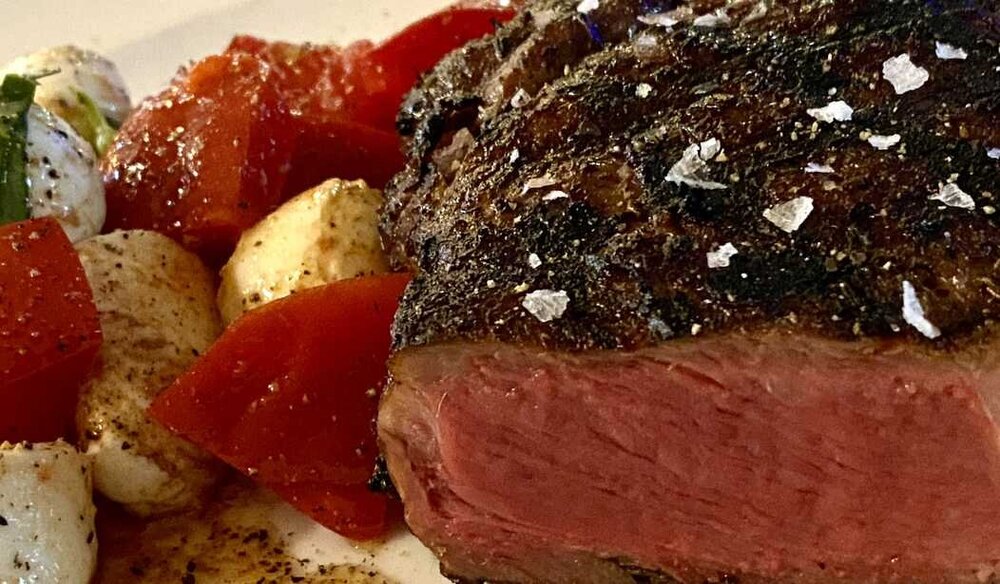
Photo and steak by the author.
As a red-blooded American male, I believe that there’s nothing like a good steak (just like the one in the featured image from the estimable VodkaPundit), some fried chicken, pulled pork, or shrimp off the grill. I’m blessed to have several farm stores near me that allow me to get the best quality meat.
One thing that won’t touch my lips as long as I can help it is lab-grown “meat.” It sounds gross, and it can’t be as good as real meat. Thankfully, a growing chorus of states is taking action regarding the nasty stuff, and Montana is the latest state to do so.
Gov. Greg Gianforte (R-Mont.) signed HB401 into law at the beginning of this month; that law bans the manufacture, sale, and distribution of lab-grown “meat.”
“If you’ve ever had the pleasure of enjoying a cut of Montana beef, you know there is no substitute,” Gianforte announced in a press release. “By signing House Bill 401 into law, I am proud to defend our way of life and the hardworking Montana ranchers who produce the best beef in the world.”
Additionally, National Hog Farmer reports that “Indiana took another route this week, issuing a two-year moratorium on the products from July 1, 2025 to June 30, 2027. Following the temporary ban, cultivated meat products will then be required to display the phrase ‘this is an imitation meat product.’”
Nebraska has a bill in front of its legislature that would outlaw cultivated meat products, although some legislators are trying to amend the bill to make it a labeling requirement rather than a ban. Alabama, Mississippi, and Florida have enacted legislation targeting lab-grown “meat.”
Of course, the biggest argument in favor of lab-grown “meat” is that it’s more sustainable than real meat, but organizations like the Center for the Environment and Welfare and a study from the University of California, Davis say otherwise. The UC Davis study discovered that the potential for global warming (so take it with a grain of salt) from fake meat creation in a lab is anywhere from four to 25 times higher!
“The lab-grown meat sector will continue to face headwinds as consumers and lawmakers learn more about the use of ‘immortalized cells’ and the lack of long-term nutritional and health studies around the product," Jack Hubbard, CEW executive director, told National Hog Farmer. “We are seeing a bipartisan consumer movement against the experimental product that we believe will intensify as more learn about how lab-grown meat is manufactured."
I’m glad states are taking action, and I hope more states will follow suit. At the absolute least, consumers ought to know what they’re getting. But ideally, nasty fake meat from a lab should never make it onto store shelves.
You can help us in our calling to report the truth with the conservative perspective you crave and a dash of style by becoming a PJ Media VIP.
Our VIPs are the lifeblood of what we do, and they invest in our mission — plus they receive some great rewards, including exclusive content, podcasts, an ad-free experience, and commenting privileges.
It’s a great time to become a VIP because you can get 60% off your VIP membership when you use the code FIGHT. Come join us!
Chris Queen is an editor and columnist at PJ Media. He's a UGA alum (#DGD), a fan of anything involving his beloved Georgia Bulldogs, and an amateur Disney historian. He's a Certified Bourbon Steward, but that doesn't make him a bourbon snob.
Subscribe to his Substack (for free), buy his book Neon Crosses, and follow him on X. For media inquiries, please contact *****@*****.tld.
Read more by Chris Queen
ARTICLE SOURCE: https://pjmedia.com/chris-queen/2025/05/19/states-are-taking-action-against-lab-grown-meat-n4939937
Subscribe to Carnivore Talk on YouTube | Be our guest on the channel | Leave me a voicemail, yo!