Welcome to our Carnivore / Ketovore / Keto Online Community!
Welcome to Carnivore Talk! An online community of people who have discovered the benefits of an carnviore-centric ketogenic diet with the goal of losing weight, optimizing their health, and supporting and encouraging one another. We warmly welcome you! [Read More]
What Is Hybrid Meat And How Does It Differ From Plant-Based Varieties?
- Replies 4
- Views 1.6k
- Created
- Last Reply
Top Posters In This Topic
-
Steven2023 2 posts
-
Bob 1 post
-
Geezy 1 post



Popular Days
Most Popular Posts
-
I believe this whole agenda is politically motivated and proponents have absolutely no concern of health pros/cons. If they can, they will figure out some sort of loophole to keep this off the labels.
-
I think it will come down to this in the long run if things don't get turned around. It will be a lot harder for those who don't live anywhere near ranchers.
-
It is something we should all fear. Sent from my iPhone using Tapatalk
Posted Images
Featured Replies
Similar Content
-
- 2 replies
- 4,018 views
-
- 3 replies
- 1,667 views

Featured Content
-
"World Carnivore Month" January Challenge!
Today is the first day of January and is also the first day of World Carnivore Month. To that end, let's challenge ourselves to eat a carnivore diet for the entire month of January. The type of carnivore diet and the level of strictness you choose to do is entirely up to you. Examples of carnivore diets include the following... 1) The Lion Diet. A person eating the Lion Diet only consumes the flesh of ruminant animals, water, and salt. 2) The BBBE Diet. BBBE is an acronym for Beef, Butter, Bacon, and Eggs. 3) The Carnivore Diet. This allows for the consumption of any and all animals and animal by-products, including dairy. In any of the above examples, the object of course is to not consume any plants as part of your diet. Of course, we're not going to micromanage hoe you prepare your food, so your use of seasonings is entirely your own personal choice. IF your circumstances don't allow you to go full on carnivore in January, then you can participate in this topic by challenge yourself to do better, above and beyond what you have been doing. For example, if you have still been eating grains, seed oils, refined sugar, or drinking alcohol, challenge yourself to avoid these items and just eat a clean, single ingredient whole foods diet such as clean keto, ketovore, or animal based. We encourage you to check in daily, and share what you have eaten, perhaps a weigh-in if you're willing, and enjoy in some small talk. Participants in this topic will be entered into a drawing for a prize at the end of the month.-
- 193 replies
 Featured by Guest
 -
-
What is your favorite way to eat/prepare eggs?
Vote for your favorite way to prepare eggs!
- 45 replies
Featured by Bob



Okay, so this is a little scarier. The prospect of blending lab meat and real meat together. It better be clearly marked.
------------------------------
What Is Hybrid Meat And How Does It Differ From Plant-Based Varieties?
BY CORIN MJ BAE/OCT. 7, 2023 9:00 PM EST
Nevodka/Getty Images
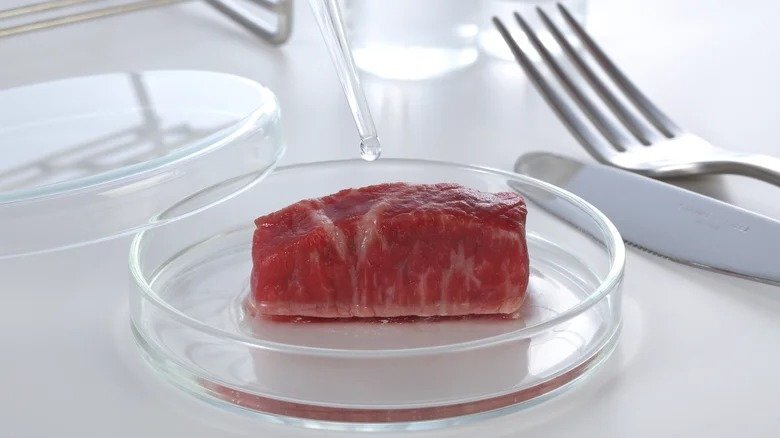
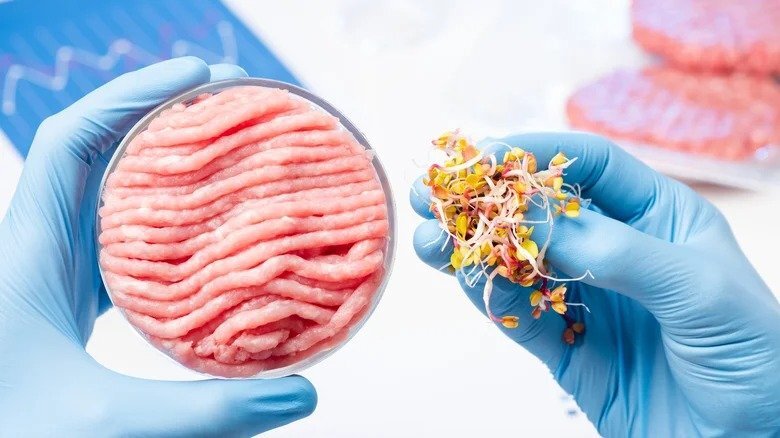
Despite studies showing that eating meat increases greenhouse gas emissions — and that just a 50% plant-based substitution could cut emissions by a third — projections for global meat consumption are going up. With the plant-based meat industry facing substantial financial hurdles due to a lack of demand, it seems like the human appetite for a real cut of beef isn't going anywhere anytime soon. Thankfully, there's a strong candidate for a long-term solution to the problem: hybrid meat, an alt-meat that combines lab-cultivated animal meat and plant-based substitutes for the most authentic taste possible at a much more sustainable footprint.
You might be asking, why not just pivot to cultivated meat entirely? The lab meat industry has been making major breakthroughs in science and legislation, with 2023 seeing the first FDA approval of cultivated meat. However, despite the fact that the U.S. will most definitely be seeing more cultivated meat products in the future, the harsh truth is that lab-grown meat production is still too expensive to be viable from a consumer perspective. Combining it with plant-based alternatives not only helps lower the price but adds a healthier element via the vegetables included in the plant-based portion: The newly growing hybrid meat industry is looking to tackle the issue by innovating the perfect ratio between taste and affordability to offer an alt-meat that's the best of every world.
The growing industry of hybrid meat
Studiocasper/Getty Images
Currently, the biggest names in the hybrid meat industry are Meatable and Love Handle, two sustainability-focused companies collaborating on the world's first hybrid meat development facility in Singapore. Announced in late 2022, the Future of Meat Innovation Center currently hosts Meatable and Love Handle's projects as well as inviting those of other alt-meat startups and ventures with the ultimate goal of fostering the industry as a whole. So far, the center has seen some incredible progress: According to Meatable, the company now has a means of producing real meat tissue from cells in as little as eight days and will be launching its hybrid meat products in Singapore as early as 2024.
Currently, Meatable has every intention of expanding its operations to the U.S. market. However, with the sharp drop in revenue, setbacks, and loss of consumer faith the alt-meat industry has been battling in the U.S., it's unclear if hybrid meat will be able to make a solid landing and establish itself in the current market. There's also the looming fact that, despite the plant-based element making hybrid meat much cheaper than 100% cultivated meat, it remains a premium-priced product in comparison to conventional meat. Hopefully, we'll be seeing further innovations that'll help bring hybrid meat — as well as completely plant-based alternatives — closer to price parity and onto our tables.
-----
Article Source: https://www.tastingtable.com/1409364/what-is-hybrid-meat-difference-meatless-varieties/
^ compliance with terms ("You are not permitted to reproduce Static Media Content in any online website or distribution method if for any reason you do not provide a link back to the specific URL of the Static Media Content.")