Welcome to our Carnivore / Ketovore / Keto Online Community!
Welcome to Carnivore Talk! An online community of people who have discovered the benefits of an carnviore-centric ketogenic diet with the goal of losing weight, optimizing their health, and supporting and encouraging one another. We warmly welcome you! [Read More]
Eating Red Meat and Dairy Can Help Fight Cancer
- Replies 2
- Views 1.5k
- Created
- Last Reply


Popular Days
Most Popular Posts
-
“Trying to decipher the link between diet and human health “ I appreciate that statement but at the same time It’s ridiculous that the scientific community doesn’t already know that diet is related a
-
I wholeheartedly agree. I was a bit hesitant to post the article because of the way it wrapped up, but I was still excited by the headline and the positive evidence for meat consumption contained ther
Posted Images
Featured Replies
Similar Content
-
- 3 replies
- 1,628 views
Featured Content
-
"World Carnivore Month" January Challenge!
Today is the first day of January and is also the first day of World Carnivore Month. To that end, let's challenge ourselves to eat a carnivore diet for the entire month of January. The type of carnivore diet and the level of strictness you choose to do is entirely up to you. Examples of carnivore diets include the following... 1) The Lion Diet. A person eating the Lion Diet only consumes the flesh of ruminant animals, water, and salt. 2) The BBBE Diet. BBBE is an acronym for Beef, Butter, Bacon, and Eggs. 3) The Carnivore Diet. This allows for the consumption of any and all animals and animal by-products, including dairy. In any of the above examples, the object of course is to not consume any plants as part of your diet. Of course, we're not going to micromanage hoe you prepare your food, so your use of seasonings is entirely your own personal choice. IF your circumstances don't allow you to go full on carnivore in January, then you can participate in this topic by challenge yourself to do better, above and beyond what you have been doing. For example, if you have still been eating grains, seed oils, refined sugar, or drinking alcohol, challenge yourself to avoid these items and just eat a clean, single ingredient whole foods diet such as clean keto, ketovore, or animal based. We encourage you to check in daily, and share what you have eaten, perhaps a weigh-in if you're willing, and enjoy in some small talk. Participants in this topic will be entered into a drawing for a prize at the end of the month.-
- 193 replies
 Featured by Guest
 -
-
What is your favorite way to eat/prepare eggs?
Vote for your favorite way to prepare eggs!
- 45 replies
Featured by Bob



Eating beef staves off cancer, scientists discover
Story by Isobel Williams
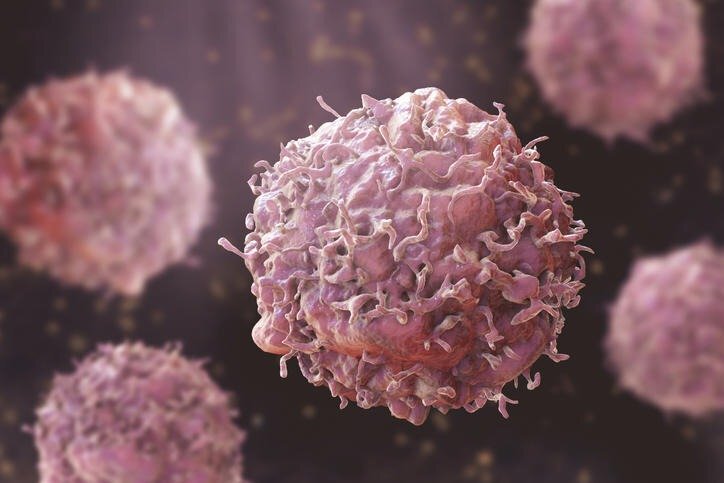
A fatty acid in red meat and dairy helps destroy cancer cells (Picture: Getty/Science Photo Libra)© Provided by Metro
Eating red meat and dairy could help to fight cancer, a new study suggests.
Scientists have discovered that a specific fatty acid found in beef, lamb and dairy products improves the body’s ability to attack and kill tumours.
The study, published in the journal Nature, also shows that patients with higher levels of the fatty acid – known as trans-vaccenic acid (TVA) – in their blood responded better to immunotherapy, suggesting that it could work as a nutritional supplement to complement clinical cancer treatments.
‘There are many studies trying to decipher the link between diet and human health, and it’s very difficult to understand the underlying mechanisms because of the wide variety of foods people eat,’ said co-author Professor Jing Chen, of the University of Chicago.
‘But if we focus on just the nutrients and metabolites derived from food, we begin to see how they influence physiology and pathology.
‘By focusing on nutrients that can activate T cell [immune] responses, we found one that actually enhances anti-tumour immunity by activating an important immune pathway.’
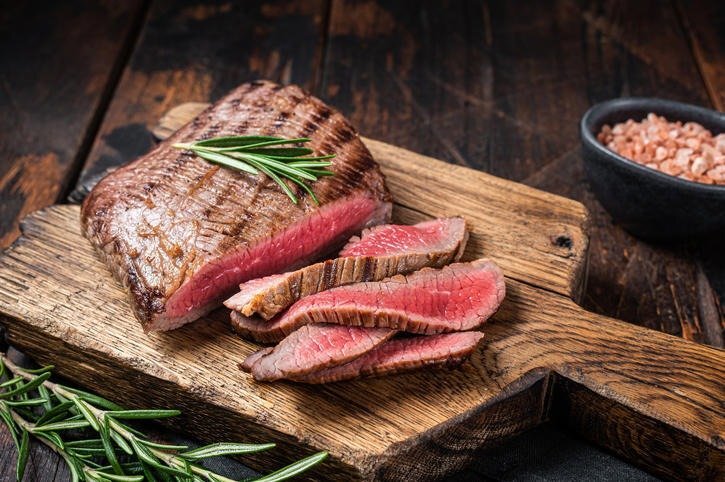
Could steak help cure cancer? (Picture: Getty/iStockphoto)© Provided by Metro
For the study, the team started with a database of around 700 known metabolites, small molecules that come from food, and assembled a ‘blood nutrient’ library.
They then screened the compounds in this new library for their ability to influence anti-tumour immunity.
After the scientists evaluated the top six candidates in both human and mouse cells, they saw that TVA performed the best.
‘After millions of years of evolution, there are only a couple hundred metabolites derived from food that end up circulating in the blood, so that means they could have some importance in our biology,’ said Professor Chen.
‘To see that a single nutrient like TVA has a very targeted mechanism on a targeted immune cell type, with a very profound physiological response at the whole organism level – I find that really amazing and intriguing.’
The team found that feeding mice a diet enriched with TVA significantly reduced the tumour growth potential of melanoma and colon cancer cells, as well as enhancing the body’s ability to infiltrate tumours.
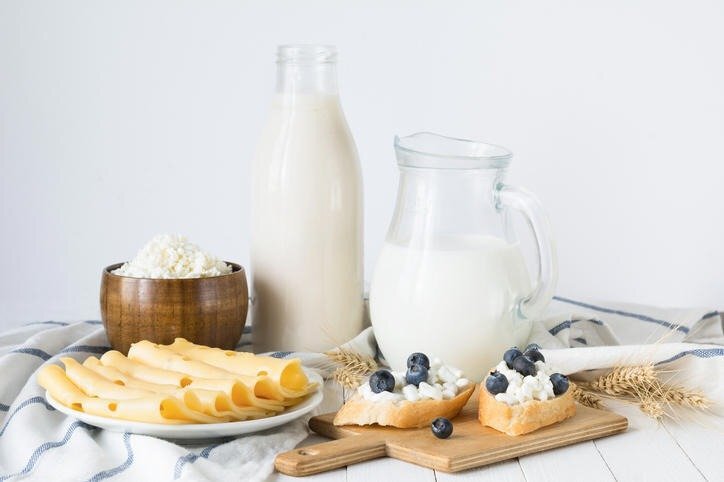
Dairy products also contain a ‘good’ fatty acid that appears to help fight cancer (Picture: Getty)© Provided by Metro
They then analysed blood samples from hospital patients undergoing immunotherapy treatment for lymphoma and discovered that patients with higher levels of TVA tended to respond better to treatment than those with lower levels.
Finally, the study discovered that TVA enhanced the ability of an immunotherapy drug to kill leukaemia cells in patients.
However, the authors do not believe eating excessive red meat is the solution and hope to find similar results in plants.
Professor Chen added: ‘There is a growing body of evidence about the detrimental health effects of consuming too much red meat and dairy, so this study shouldn’t be taken as an excuse to eat more cheeseburgers and pizza.
‘There is early data showing that other fatty acids from plants signal through a similar receptor, so we believe there is a high possibility that nutrients from plants can do the same thing by activating the CREB pathway as well.’
-----
Article Source: https://www.msn.com/en-us/health/medical/eating-beef-staves-off-cancer-scientists-discover/ar-AA1kmI9g
Subscribe to Carnivore Talk on YouTube | Be our guest on the channel | Leave me a voicemail, yo!