Welcome to our Carnivore / Ketovore / Keto Online Community!
Welcome to Carnivore Talk! An online community of people who have discovered the benefits of an carnviore-centric ketogenic diet with the goal of losing weight, optimizing their health, and supporting and encouraging one another. We warmly welcome you! [Read More]
Daily Chat and Progress Check-In for February 2026
- Replies 19
- Views 883
- Created
- Last Reply




Most Popular Posts
-
Me too. My PCP still suggests a statin or a non-statin for my cholesterol. He is a big fan of the weight loss but not the biggest fan of the route. He wants me to use lean cuts of meat. I almost attem
-
Ok. I got a plan. Exercise is increasing. It is a zero carb life as per usual. Coke Zero is still in the rear view mirror. So in January I used no Rapid Acting insulin abd cut the long acting in
-
We all are just a bit different to some degree. It is the bell curve, most of us are under it somewhere perhaps under one of the tails I react negatively to many drugs. Particularly T2DM and
Posted Images
Featured Replies
Featured Content
-
"World Carnivore Month" January Challenge!
Today is the first day of January and is also the first day of World Carnivore Month. To that end, let's challenge ourselves to eat a carnivore diet for the entire month of January. The type of carnivore diet and the level of strictness you choose to do is entirely up to you. Examples of carnivore diets include the following... 1) The Lion Diet. A person eating the Lion Diet only consumes the flesh of ruminant animals, water, and salt. 2) The BBBE Diet. BBBE is an acronym for Beef, Butter, Bacon, and Eggs. 3) The Carnivore Diet. This allows for the consumption of any and all animals and animal by-products, including dairy. In any of the above examples, the object of course is to not consume any plants as part of your diet. Of course, we're not going to micromanage hoe you prepare your food, so your use of seasonings is entirely your own personal choice. IF your circumstances don't allow you to go full on carnivore in January, then you can participate in this topic by challenge yourself to do better, above and beyond what you have been doing. For example, if you have still been eating grains, seed oils, refined sugar, or drinking alcohol, challenge yourself to avoid these items and just eat a clean, single ingredient whole foods diet such as clean keto, ketovore, or animal based. We encourage you to check in daily, and share what you have eaten, perhaps a weigh-in if you're willing, and enjoy in some small talk. Participants in this topic will be entered into a drawing for a prize at the end of the month.-
- 193 replies
 Featured by Guest
 -
-
What is your favorite way to eat/prepare eggs?
Vote for your favorite way to prepare eggs!
- 45 replies
Featured by Bob



02/01/2026. I am currently 69 1/2 years of age. Been improving my health for 55 months. I eat a Ketogenic Diet that is as close as I can get to Zero carbs each day. My last health issue is Diabetes. I was diagnosed T2DM on May 4, 1992. I am allergic to most diabetic drugs. I eat one meal a day (OMAD) . I mostly eat Beef, Bacon, Butter, and Eggs (BBBE).
I maintain my Blood Glucose Level at <130 mg/dL. I currently inject 25 units of long acting Lantus Insulin once a day ar the same time every day. For 5 months previous I was using a 50 unit dose. I no longer use any rapid, short term acting insulin. Beginning today I am exercising more. My reduced my Insulin dose from 50bunits per day, after 5 weeks of not drinking Coke Zero. I do not know if there is a relationship there. This is a very recent change.
I have no kidney or eye issues from being diabetic. I do have mild to moderate foot neuropathy. And I do have Chronic Venous insufficiency.
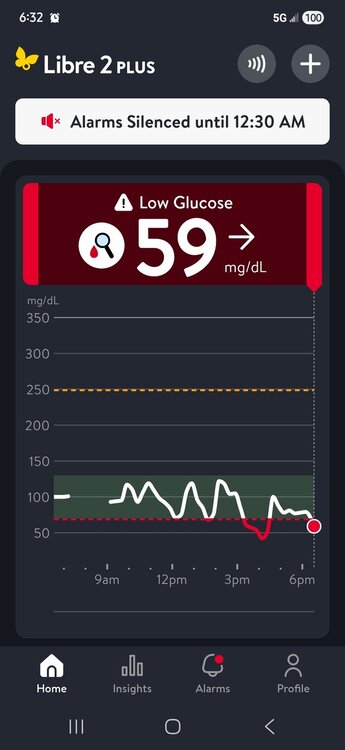
I wear a Libre 2 Plus Continuous Glucose Monitor (CGM). Using its reports, i make decisions on my Insulin dose and how what I eat and how my activity effects my BGL.
I will soon do blood work labs to see how much insulin I am producing, certain enzyme analysis, and other tests. Hope to answer if am LADA, often called type 1.5 diabetes.
I do supplement with D3/K2, Iodine, and Co-Q-10. I have a 6 month follow up appointment with an Endocrinologist in early April.
Paul