Welcome to our Carnivore / Ketovore / Keto Online Community!
Welcome to Carnivore Talk! An online community of people who have discovered the benefits of an carnviore-centric ketogenic diet with the goal of losing weight, optimizing their health, and supporting and encouraging one another. We warmly welcome you! [Read More]
Foods that Americans were told to avoid for decades are back under Trump's new nutrition rules
- Replies 10
- Views 613
- Created
- Last Reply




Most Popular Posts
-
Since the food pyramid flip a few weeks ago I have began to wonder...... Will it be as easy to sell it this time as it was last time? It has to be one of the greatest marketing efforts in the history
-
I hope so, simply because while it's not perfect, it is a step in the right direction. You have to be a moron to take issue with the message "eat real food" and to minimize or eliminate heavily proces
-
Agreed. I guess the double edge sword could have more than two sides now. "I'm from the government and I am here to help" has made people weary of any government since the first vote was cast. Peopl
Posted Images

Featured Replies
Similar Content
-
- dining out
- food pyramid
- grains
- low fat
-
Tagged with:
- 0 comments
- 1,801 views
-
- 2 comments
- 736 views
Featured Content
-
"World Carnivore Month" January Challenge!
Today is the first day of January and is also the first day of World Carnivore Month. To that end, let's challenge ourselves to eat a carnivore diet for the entire month of January. The type of carnivore diet and the level of strictness you choose to do is entirely up to you. Examples of carnivore diets include the following... 1) The Lion Diet. A person eating the Lion Diet only consumes the flesh of ruminant animals, water, and salt. 2) The BBBE Diet. BBBE is an acronym for Beef, Butter, Bacon, and Eggs. 3) The Carnivore Diet. This allows for the consumption of any and all animals and animal by-products, including dairy. In any of the above examples, the object of course is to not consume any plants as part of your diet. Of course, we're not going to micromanage hoe you prepare your food, so your use of seasonings is entirely your own personal choice. IF your circumstances don't allow you to go full on carnivore in January, then you can participate in this topic by challenge yourself to do better, above and beyond what you have been doing. For example, if you have still been eating grains, seed oils, refined sugar, or drinking alcohol, challenge yourself to avoid these items and just eat a clean, single ingredient whole foods diet such as clean keto, ketovore, or animal based. We encourage you to check in daily, and share what you have eaten, perhaps a weigh-in if you're willing, and enjoy in some small talk. Participants in this topic will be entered into a drawing for a prize at the end of the month.-
- 193 replies
 Featured by Guest
 -
-
What is your favorite way to eat/prepare eggs?
Vote for your favorite way to prepare eggs!
- 45 replies
Featured by Bob




Foods that Americans were told to avoid for decades are back under Trump's new nutrition rules
By Andrea Margolis
Published January 18, 2026 11:01am PST
Foods that Americans were advised to avoid for decades are back on shopping lists — following updated federal dietary guidance released under President Donald Trump's administration.
After years of being told to avoid full-fat dairy, red meat and saturated fats like butter and beef tallow, the White House said updated guidance no longer broadly discourages those foods when consumed in moderation.
The changes reflect revisions to federal nutrition recommendations developed through the Departments of Health and Human Services (HHS) and Agriculture (USDA), rather than a wholesale reversal of prior advice.
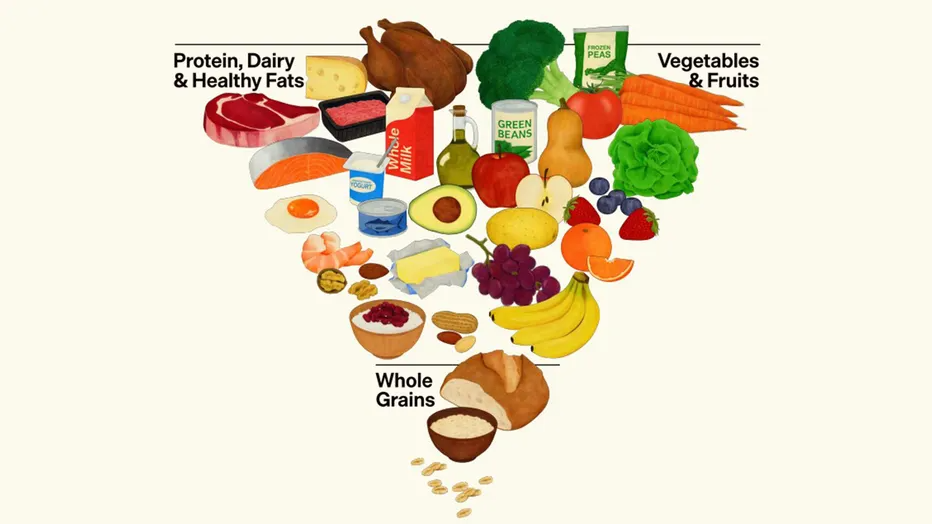
Image: Dietary Guidelines for Americans, Department of Health & Human Services
It doesn't mean that every fatty food is encouraged. For example, experts still caution against eating too many processed snacks that are high in saturated fat such as chips, cookies and ice cream.
HHS Secretary Robert F. Kennedy Jr. said he was "ending the war on saturated fats" — though the updated report continues to recommend limits on daily intake.
"Protein and healthy fats are essential and were wrongly discouraged in prior dietary guidelines," he said.
Here's a handy summary of which foods are back — and how federal guidance and nutrition experts say they should be consumed.
1. Full-fat milk and yogurt
The new 2025–2030 Dietary Guidelines for Americans describe full-fat milk and yogurt as "healthy fats."
"In general, saturated fat consumption should not exceed 10% of total daily calories," the report states.
"Significantly limiting highly processed foods will help meet this goal. More high-quality research is needed to determine which types of dietary fats best support long-term health."
Full-fat dairy is packed with fat-soluble vitamins such as vitamin A, D, E and K, which "allows for better transportation and absorption," said Amy Goldsmith, a Maryland-based registered dietitian and owner of Kindred Nutrition.
"There can also be an increased satiation from the products, as the fat will decrease [the hormone] ghrelin," she told Fox News Digital.
Goldsmith noted saturated fat should still be portioned, even if not completely cut out.
"This is the nuance with the new dietary guidelines," she said. "As dietitians, we want to ensure this visualization [doesn't lead] to an increase in saturated fat, as it could contribute to an increase in chronic disease."
There's usually less added sugar in full-fat products, she noted, but they still need to be portioned out to avoid the consumption of too much saturated fat and total calories.
2. Butter
The Trump administration's new report lists butter as one of several fats that may be used in cooking, while prioritizing unsaturated oils.
"When cooking with or adding fats to meals, prioritize oils with essential fatty acids, such as olive oil," according to the guidelines. "Other options can include butter or beef tallow."
Goldsmith said butter is a great source of vitamin A, which is "essential for vision and immune health."
It also has vitamin E, an antioxidant, and vitamin K2 — which "ensures calcium is used to strengthen bones and teeth."
"It also is the best source of butyric acid, which serves as an anti-inflammatory," Goldsmith said.
"Most butters are 60–70% saturated fat… so it will be difficult to keep total saturated fat intake within recommended limits if portion and volume aren't taken into consideration," she added.
"In addition, if someone already has a high LDL cholesterol, butter would not be the best source of spread as it can continue to contribute to increasing LDL."
3. Beef tallow
Beef tallow is high in vitamin A, D, E and K, similar to other animal-based fats.
Goldsmith also noted that 40–50% of beef tallow is monounsaturated fat, a proportion comparable to some plant-based oils.
"The other 50% is saturated fat, however. So once again, serving size and volume need to be considered to keep saturated fat below 10% of total calories," she said.
"In addition, beef tallow can be more expensive than butter and difficult to get."
4. Red meat
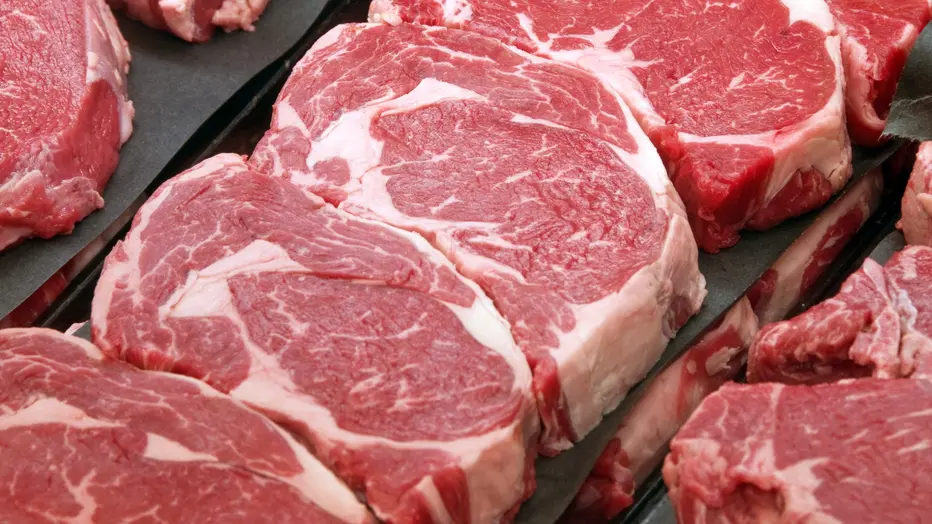
Red meat contains essential amino acids that can't be produced by the human body, a dietitian said. (Getty Images)
The new report recommends "[consuming] a variety of protein foods from animal sources, including eggs, poultry, seafood and red meat, as well as a variety of plant-sourced protein foods, including beans, peas, lentils, legumes, nuts, seeds and so."
Goldsmith noted that red meat contains all nine of the essential amino acids that can't be produced by the human body alone.
"About 60% of the iron in meat is heme iron, and it's one of the best sources of zinc," she said.
"Heme iron is absorbed into the gut fast, which means it can rapidly restore ferritin, your iron stores."
Red meat's zinc is also crucial for immune cells and inflammation control.
"The new dietary guidelines stuck with the recommendation to keep saturated fat below 10% and, on average, red meat is 40–45% saturated fat," Goldsmith said.
"It will be important to vary animal protein to keep the saturated fat number down as high saturated fat diets contribute to heart disease and cancers."
Read more from FOX News Digital
ARTICLE SOURCE: https://www.ktvu.com/news/foods-americans-were-told-avoid-decades-back-under-trumps-new-nutrition-rules
Subscribe to Carnivore Talk on YouTube | Be our guest on the channel | Leave me a voicemail, yo!