Welcome to our Carnivore / Ketovore / Keto Online Community!
Welcome to Carnivore Talk! An online community of people who have discovered the benefits of an carnviore-centric ketogenic diet with the goal of losing weight, optimizing their health, and supporting and encouraging one another. We warmly welcome you! [Read More]
- Replies 7
- Views 1.2k
- Created
- Last Reply



Most Popular Posts
-
What is a inhumane beef industry? Cattle get medical attention and all water and food they can eat delivered, year around. Compare that to a wild animals life of routine hunger and a death we human
-
Some of the fat you speak of is as much environment as it is the split between grass fed and corn fed. The cows in smaller pastures who are fed in the same spot most everyday don't travel much. No nee
-
As always, an expert explanation, was going to say this, but I'd sound a lot dumber. Remember folks, compare carnivore against SAD and Vegan, and questions regarding grass-fed and organic may be trivi

Featured Replies
Featured Content
-
"World Carnivore Month" January Challenge!
Today is the first day of January and is also the first day of World Carnivore Month. To that end, let's challenge ourselves to eat a carnivore diet for the entire month of January. The type of carnivore diet and the level of strictness you choose to do is entirely up to you. Examples of carnivore diets include the following... 1) The Lion Diet. A person eating the Lion Diet only consumes the flesh of ruminant animals, water, and salt. 2) The BBBE Diet. BBBE is an acronym for Beef, Butter, Bacon, and Eggs. 3) The Carnivore Diet. This allows for the consumption of any and all animals and animal by-products, including dairy. In any of the above examples, the object of course is to not consume any plants as part of your diet. Of course, we're not going to micromanage hoe you prepare your food, so your use of seasonings is entirely your own personal choice. IF your circumstances don't allow you to go full on carnivore in January, then you can participate in this topic by challenge yourself to do better, above and beyond what you have been doing. For example, if you have still been eating grains, seed oils, refined sugar, or drinking alcohol, challenge yourself to avoid these items and just eat a clean, single ingredient whole foods diet such as clean keto, ketovore, or animal based. We encourage you to check in daily, and share what you have eaten, perhaps a weigh-in if you're willing, and enjoy in some small talk. Participants in this topic will be entered into a drawing for a prize at the end of the month.-
- 193 replies
 Featured by Guest
 -
-
What is your favorite way to eat/prepare eggs?
Vote for your favorite way to prepare eggs!
- 45 replies
Featured by Bob



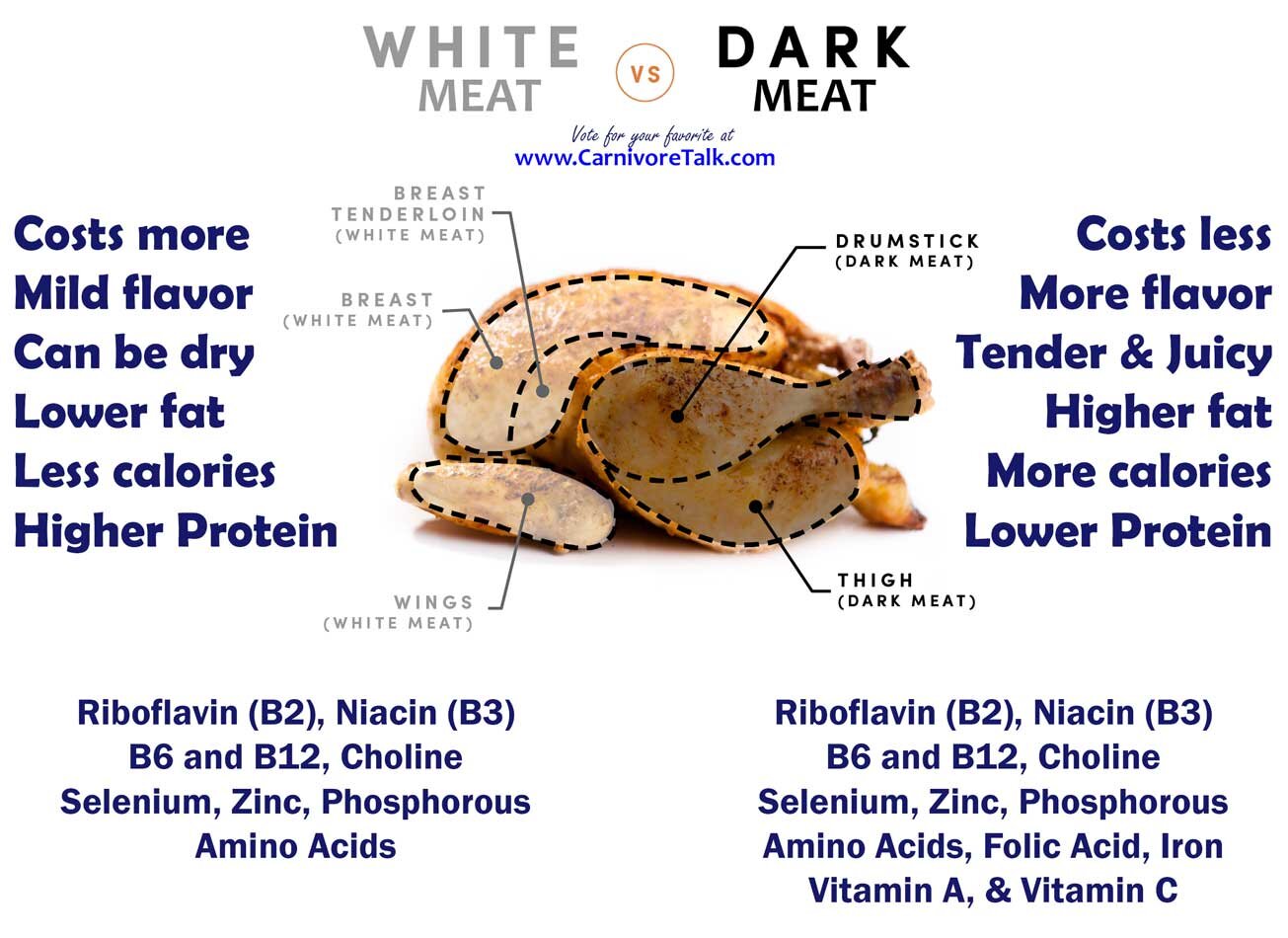

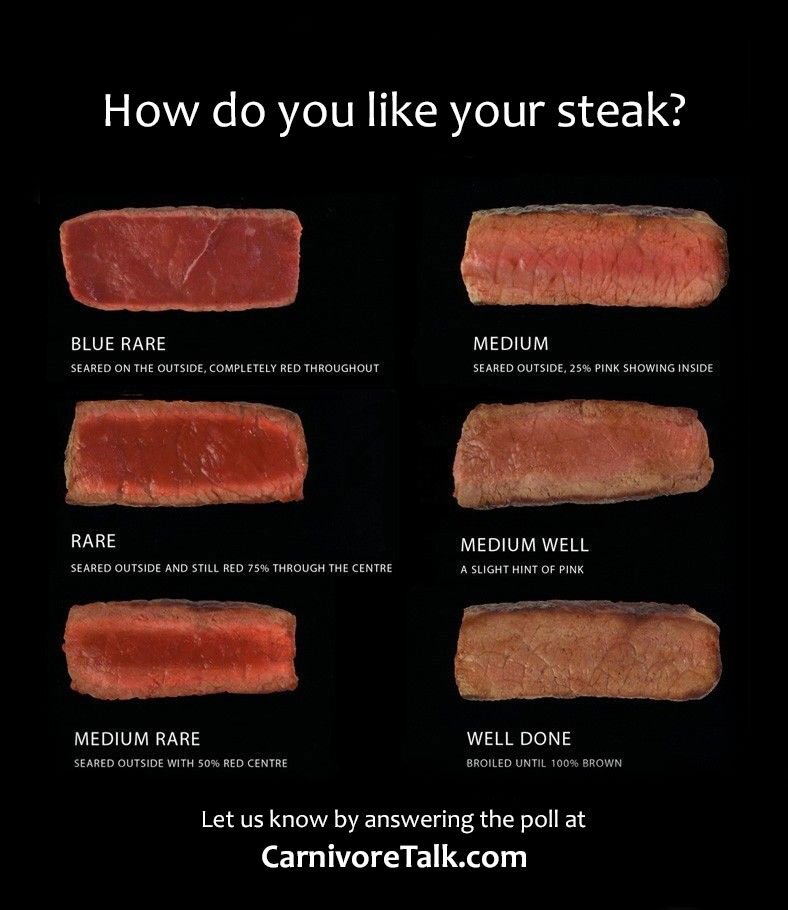
After taking possession of our Beef last week, it has stirred a question in me. I was amazed at how deep red the color of the beef is, compared to grocery store beef, but even the 1/2 Beef we purchase last year. This beef is more the color of Elk Meat. This calf was on mama cow's milk, up to it's 11th month of life and then on a grass, cracked corn and silage diet for about 45 days before going to the processor. The rancher tells me the meat is so dark red for two reasons. #1. The calf if mostly grass fed. #2. The calf spent 6 months in the mountains, above 9,000 feet elevation.
The negative of this calf is that it will not grade Prime and probably not even Choice, but is likely Select. The Tenderloin we ate last week was spectacular, but the Ribeye we ate last night was about as tough as a Sirloin, but it just didn't have any marbling. There just isn't much marbling and there is very, very little fat on the Ribeyes. I suspect all grass fed beef is Standard or Select, not having a long Corn diet where the fat reserves are really built up.
But this got me to thinking..... I actually wonder how "healthy" prime grade beef is, where the fat reserves are built up on a Corn diet? In us eating that fat, I wonder how much of it clogs our arteries? And I wonder if grass fed is much more "healthy" for us to eat?
I suspect what some of you will say, with most of the very recent data and evidence coming out regarding Keto and Carnivore on the health of humans. But I think the question is a valid one.... There is so much negative about humans eating wheat and corn, so what's the effect of us eating Beef that has been gorged on wheat and corn?