Welcome to our Carnivore / Ketovore / Keto Online Community!
Welcome to Carnivore Talk! An online community of people who have discovered the benefits of an carnviore-centric ketogenic diet with the goal of losing weight, optimizing their health, and supporting and encouraging one another. We warmly welcome you! [Read More]
The Women Who Ate Only Fruit... DIED!
- Replies 7
- Views 1.3k
- Created
- Last Reply
Top Posters In This Topic
-
Scott F. 3 posts
-
Geezy 1 post
-
Jamie Henry Brown 1 post
-
pauls 1 post




Most Popular Posts
-
WOW! So my question is that this didn't happen overnight and I would have to think someone said something? At some point a person has to look in the mirror and see the results of their choices. I hav
-
Sad to hear her passing but this goes to show how toxic a fruit only diet is. (And vegan diet in general). It works short term due to not triggering the randle cycle but long term it's devoid of any n
-
I Renee when that happened. It was so sad. She had an eating disorder for sure.
Posted Images

Featured Replies
Similar Content
-
- 15 replies
- 2,343 views

Featured Content
-
"World Carnivore Month" January Challenge!
Today is the first day of January and is also the first day of World Carnivore Month. To that end, let's challenge ourselves to eat a carnivore diet for the entire month of January. The type of carnivore diet and the level of strictness you choose to do is entirely up to you. Examples of carnivore diets include the following... 1) The Lion Diet. A person eating the Lion Diet only consumes the flesh of ruminant animals, water, and salt. 2) The BBBE Diet. BBBE is an acronym for Beef, Butter, Bacon, and Eggs. 3) The Carnivore Diet. This allows for the consumption of any and all animals and animal by-products, including dairy. In any of the above examples, the object of course is to not consume any plants as part of your diet. Of course, we're not going to micromanage hoe you prepare your food, so your use of seasonings is entirely your own personal choice. IF your circumstances don't allow you to go full on carnivore in January, then you can participate in this topic by challenge yourself to do better, above and beyond what you have been doing. For example, if you have still been eating grains, seed oils, refined sugar, or drinking alcohol, challenge yourself to avoid these items and just eat a clean, single ingredient whole foods diet such as clean keto, ketovore, or animal based. We encourage you to check in daily, and share what you have eaten, perhaps a weigh-in if you're willing, and enjoy in some small talk. Participants in this topic will be entered into a drawing for a prize at the end of the month.-
- 193 replies
 Featured by Guest
 -
-
What is your favorite way to eat/prepare eggs?
Vote for your favorite way to prepare eggs!
- 45 replies
Featured by Bob



What Happened to The Women Who Ate Only Fruit
Story by Julie Hambleton
A 27-year-old woman, Karolina Krzzak, tragically died in a Bali hotel room after adhering to an extreme "fruitarian" diet. This highly restrictive, fruit-only eating pattern led to severe malnutrition and starvation, resulting in her death. At the time of her passing she weighed a mere 22 kilograms (approximately 48.5 lbs). Her story serves as a severe warning from medical professionals about the critical dangers associated with such extreme diets that promise rapid results or detoxification but lead to catastrophic health decline.
Understanding the Fruitarian Diet
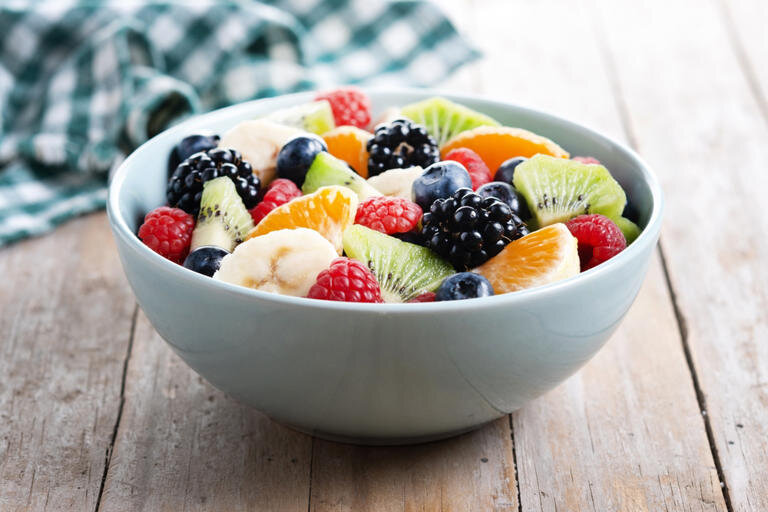
- A fruitarian diet is an extreme version of the raw vegan diet where one primarily only eats fruit. Image credit: Shutterstock
The fruitarian diet is an extremely restrictive subset of veganism where the consumer's primary, or sometimes exclusive, source of nutrition is raw fruit. While variations exist, some strict followers aim for 75% or more of their diet to consist of fruits, with the remainder potentially coming from nuts, seeds, and sometimes vegetables. The philosophy behind this diet often includes claims of detoxification, spiritual purity, and a belief that consuming only foods that can be harvested without killing the plant (like fruits that have fallen off) is the most natural and ethical way to eat. However, due to its severe limitations, the fruitarian diet is highly controversial among nutritionists, as it severely lacks essential nutrients like protein, calcium, iron, zinc, Omega-3 fatty acids, and Vitamin B12. This diet has a high risk of malnutrition, muscle loss, and severe health complications.
The Consequences of Severe Malnutrition
- Her fruitarian diet pushed her body into a starvation state.
The extreme fruitarian diet deprived Karolina of essential macronutrients and micronutrients, causing her body to enter a starvation state. Medical reports indicated she was suffering from both osteoporosis, a condition marked by weakened bones, and an albumin deficiency. These are clear consequences of prolonged, poor nutrition and starvation. The doctors said that her fruit-only diet lacked vital components like proteins, fats, calcium, iron, vitamin B12, and adequate complex carbohydrates. This severe deficiency weakens the intestinal lining, disrupts electrolyte levels, and slows metabolism, ultimately causing multiple organs to fail.
Doctor’s Warning: The Dangers of Restrictive Plans
- Karolina's fruit-only diet caused her to essentially starve to death. Credit: @carolina.mariie
Medical experts from strongly cautioned against following fruit-only or similar highly restrictive diets. They explained that while fruits offer vitamins and antioxidants, relying solely on them causes severe protein-energy malnutrition, leading to muscle loss, anemia, and life-threatening electrolyte imbalances. Furthermore, the high fructose content in excessive fruit consumption can elevate sugar, trigger insulin resistance, and increase the risk of related disease. The doctors stressed that long-term adherence to such trends can result in cognitive decline, fatigue, multi-organ dysfunction, and in severe cases like Karolina's, death. They emphasized that a healthy diet must be a balanced combination of fruits, vegetables, sufficient proteins, complex carbohydrates, and healthy fats.
Not The First ‘Fruitarian' To Suffer A Similar Fate
- Zhanna Samsonova also died in 2023 from eating a fruit-only diet.
Sadly, Karolina is not the first to suffer this fate as a result from the fruitarian diet. Zhanna Samsonova, a Russian vegan raw food influencer known online as Zhanna D'Art, tragically died in July 2023 at the age of 39 in Malaysia. Reportedly, she died from "starvation and exhaustion" exacerbated by her extremely restrictive diet. For at least the last four years of her life, she had followed an exclusively raw vegan diet, subsisting mainly on fruits, sunflower seed sprouts, fruit smoothies, and juices. At its most extreme, friends reported her diet was almost entirely fruit-based, with some claims suggesting she had not consumed water for six years. Instead, she had opted for fruit and vegetable juices. Samsonova passionately promoted this raw food lifestyle on social media, believing it transformed her body and made her look younger than her peers.
Read More: Health Organization Offers Strict ‘Soup and Shake' Diet to Reverse Type 2 Diabetes. Does it Actually Work?
The Warning Signs and Family’s Battle
- Zhanna's health declined fast due to her fruitarian diet.
Despite her online assertions of wellness, Samsonova's health had been visibly deteriorating. Friends noted her "increasingly emaciated" appearance and expressed profound worry. One friend described how they feared "finding her lifeless body in the morning." Her mother, Vera Samsonova, had desperately fought to save her daughter, disapproving of the extreme eating habits and trying to convince her to adopt a more balanced diet. Just months before her death, friends saw her in Sri Lanka looking exhausted with swollen legs and oozing lymph nodes. She was reportedly sent home to seek treatment, only to run away and resume her travels. Her official cause of death was attributed by her mother to a "cholera-like infection," which was believed to have been worsened by the extreme exhaustion and malnutrition caused by her strict vegan diet.
Are Raw, Vegan Diets To Blame?
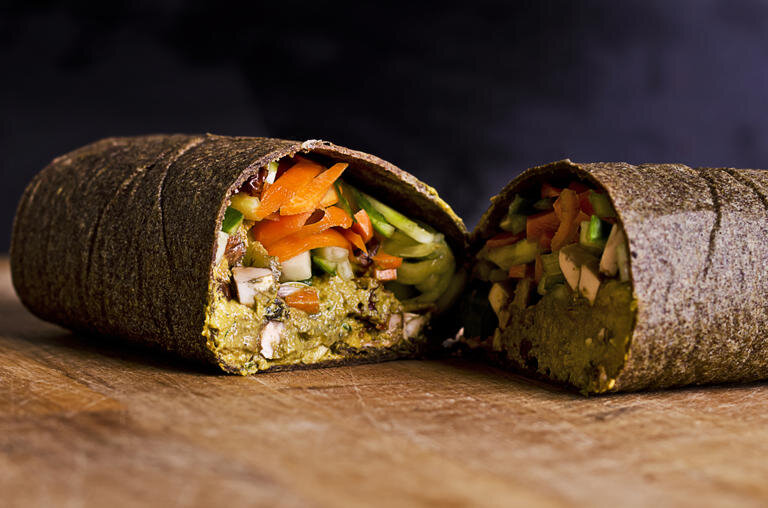
- Raw, vegan diets are not necessarily bad, but they must be balanced. Image credit: Shutterstock
The core issue that led to the deaths of both women was not a standard or balanced raw, vegan diet. Rather, it was the extreme and restrictive nature of the specific "fruitarian" and raw food regimens they followed that induced severe malnutrition and starvation. In the case of Karolina Krzyzak, doctors explicitly linked her death to starvation and the severe medical conditions directly caused by her fruit-only diet. Her death was a result of the catastrophic breakdown of her body due to the total lack of essential proteins, fats, and other critical nutrients. Therefore, the diet itself, by causing starvation, was the direct fatal mechanism.
Extreme Diets Are Not The Answer
The human body is complex and requires a wide range of macro- and micronutrients in order to function and thrive. The issue with extreme or restrictive diets such as these are that they don't provide even the minimum amount of calories that a person needs for the basic functioning of their body. Yes, fruits and vegetables are good for you – both in raw and cooked forms. Yes, the general population could eat more of these products. However, eating only fruits and vegetables does not provide you with enough protein, carbohydrates, fat, and calories to live. Eventually your body's systems will start failing. True health comes from a diet that contains a proper balance of a variety of different foods. Whole grains, root vegetables and tubers, lentils, beans, unsaturated oils, nuts and seeds, and animal sources of proteins if you so choose. It is also okay to occasionally include foods with less nutritional value, like cakes, cookies, french fries – so long as they are not regular occurance. Fruits and vegetables should be staple parts of our diet, but they cannot be the only thing we eat. If you are unsure if you are getting the right nutrition that you need, speak with a registered dietitian. They can help you build the diet that is right for you.
Disclaimer: This information is not intended to be a substitute for professional medical advice, diagnosis or treatment and is for information only. Always seek the advice of your physician or another qualified health provider with any questions about your medical condition and/or current medication. Do not disregard professional medical advice or delay seeking advice or treatment because of something you have read here.
ARTICLE SOURCE: https://www.msn.com/en-us/health/other/what-happened-to-the-women-who-ate-only-fruit/ar-AA1QrBt2?
Subscribe to Carnivore Talk on YouTube | Be our guest on the channel | Leave me a voicemail, yo!