Welcome to our Carnivore / Ketovore / Keto Online Community!
Welcome to Carnivore Talk! An online community of people who have discovered the benefits of an carnviore-centric ketogenic diet with the goal of losing weight, optimizing their health, and supporting and encouraging one another. We warmly welcome you! [Read More]
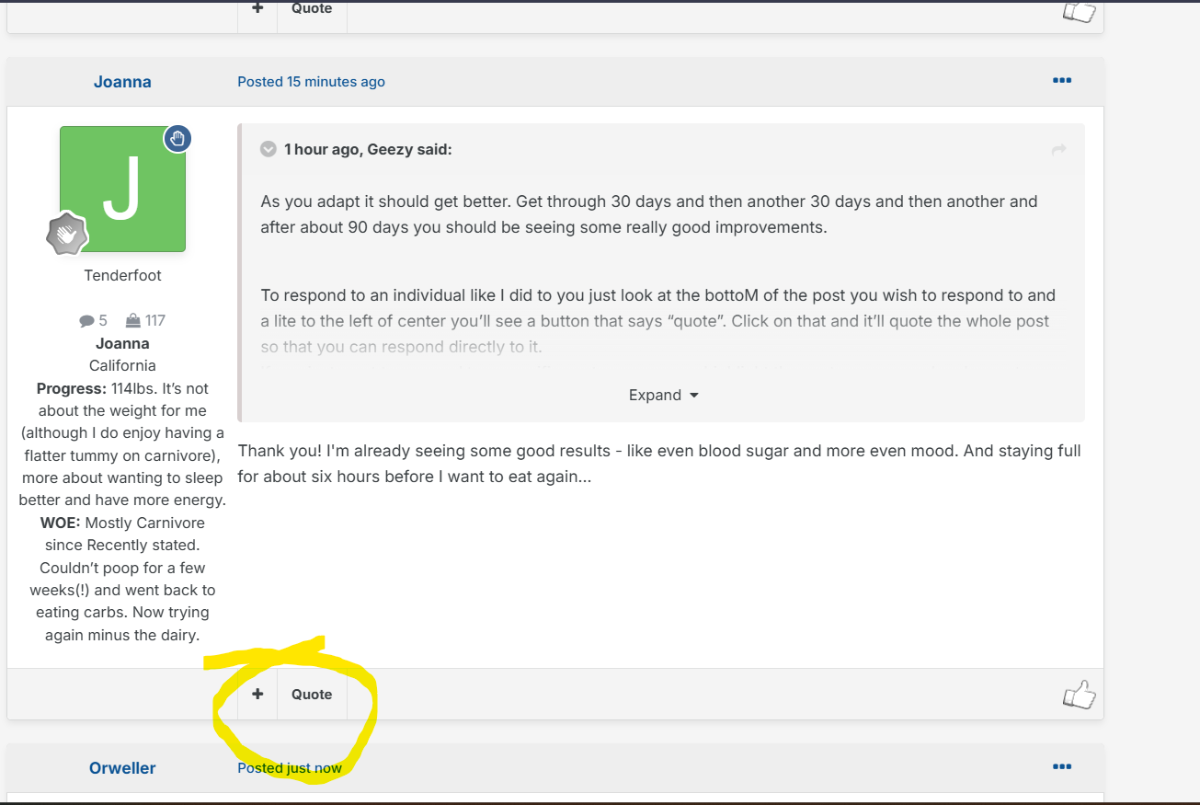
The Type A-Type B Weight Loss Book by H. L. Newbold [Files Library]
- Replies 4
- Views 1.8k
- Created
- Last Reply


Popular Days
Most Popular Posts
-
Carbs, what are those? lol
-
It's basically what kind of overweight eater are you? You are either a (A) binge eater or (B) food addict, usually triggered by certain carbs or carbs in general.
-
I think I’m both. [emoji1787] Sent from my iPhone using Tapatalk
Posted Images
Featured Replies
Similar Content
-
- 3 replies
- 236 views
-
- 2 replies
- 208 views
-
- 3 replies
- 230 views


Featured Content
-
"World Carnivore Month" January Challenge!
Today is the first day of January and is also the first day of World Carnivore Month. To that end, let's challenge ourselves to eat a carnivore diet for the entire month of January. The type of carnivore diet and the level of strictness you choose to do is entirely up to you. Examples of carnivore diets include the following... 1) The Lion Diet. A person eating the Lion Diet only consumes the flesh of ruminant animals, water, and salt. 2) The BBBE Diet. BBBE is an acronym for Beef, Butter, Bacon, and Eggs. 3) The Carnivore Diet. This allows for the consumption of any and all animals and animal by-products, including dairy. In any of the above examples, the object of course is to not consume any plants as part of your diet. Of course, we're not going to micromanage hoe you prepare your food, so your use of seasonings is entirely your own personal choice. IF your circumstances don't allow you to go full on carnivore in January, then you can participate in this topic by challenge yourself to do better, above and beyond what you have been doing. For example, if you have still been eating grains, seed oils, refined sugar, or drinking alcohol, challenge yourself to avoid these items and just eat a clean, single ingredient whole foods diet such as clean keto, ketovore, or animal based. We encourage you to check in daily, and share what you have eaten, perhaps a weigh-in if you're willing, and enjoy in some small talk. Participants in this topic will be entered into a drawing for a prize at the end of the month.-
- 193 replies
 Featured by Guest
 -
-
What is your favorite way to eat/prepare eggs?
Vote for your favorite way to prepare eggs!
- 45 replies
Featured by Bob



The Type A-Type B Weight Loss Book by H. L. Newbold
The Type A-Type B Weight Loss Book by H. L. Newbold is a book that discusses two principle causes of obesity, namely, binge eating and food addiction. It presents an program for losing weight that eliminates carbohydrates from the diet and limits food consumption to meat, fish, and raw fruits and vegetables. Newbold was a physician and researcher who treated thousands of overweight patients with his low-carbohydrate, high-protein diet, and is considered to be one of the original low carb thinkers
The value of his book lies in the insight it offers to people with food and environmental sensitivities and intolerances. He observed initially in himself, and then in his patients, that certain foods and chemicals caused uncontrollable cravings for carbohydrates and subsequent disordered “addictive” or “binge” eating. Through trial and error, he came to the conclusion that some people simply cannot tolerate what he termed “new foods” that became a major part of our diet after the Agricultural Revolution. His solution was to return to the foods of our pre-agricultural ancestors, namely meat, but more specifically beef, as well as reduce our exposure to the many chemical poisons that surround us in our modern environment.
File Information
Submitter Bob
Submitted 01/13/2024
Category Books
View File
Subscribe to Carnivore Talk on YouTube | Be our guest on the channel | Leave me a voicemail, yo!